


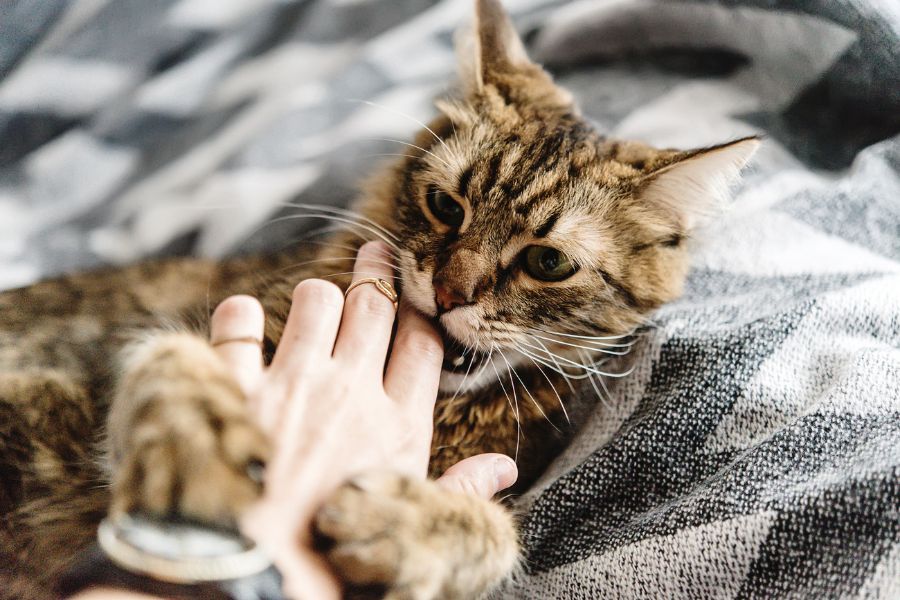
If your cat bites you out of nowhere, you are not alone. Many cat owners experience this confusing behavior and wonder what it means. Cat biting can happen for several reasons, including playfulness, fear, overstimulation, or even medical issues.
In this guide, we will explain the most common reasons cats bite, how to recognize warning signs, and what you can do to stop the behavior safely. Understanding your cat’s body language and triggers can help you build a better relationship and prevent future bites.
Why Do Cats Bite Their Owners?
Cats communicate differently from dogs or humans. While biting might seem aggressive, it is often your cat’s way of expressing emotions or needs.
Some of the most common reasons for cat biting include:
- Play aggression
- Overstimulation
- Fear or anxiety
- Attention-seeking behavior
- Territorial instincts
- Medical problems
Learning the cause behind your cat’s biting is the first step toward solving the problem.
Play Aggression: A Common Cause of Cat Biting
Play aggression is one of the most common reasons for cat biting, especially in kittens and young cats. When cats play, they mimic hunting behavior. This includes stalking, pouncing, and biting.
If your cat bites during play, you may notice:
- Dilated pupils
- Tail twitching
- Sudden pouncing
- Light bites that become harder
Cats that were separated from their littermates early are more likely to bite during play. They may not have learned proper bite control from siblings.
How to Reduce Play Biting
Try these strategies to reduce play aggression:
- Use interactive toys instead of your hands
- Schedule daily play sessions
- Avoid rough play
- Redirect biting to toys
Providing outlets for your cat’s hunting instincts can significantly reduce biting behavior.
Overstimulation, When Petting Goes Too Far
Many cats enjoy affection, but they also have limits. Overstimulation happens when petting continues longer than your cat is comfortable with. This is a common reason for cat biting that surprises many owners.
Watch for these warning signs:
- Tail flicking
- Flattened ears
- Sudden body tension
- Skin twitching
These signals mean your cat wants space. Ignoring them may lead to a bite.
How to Prevent Overstimulation Bites
To prevent overstimulation:
- Keep petting sessions short
- Pay attention to body language
- Stop petting the early warning signs
- Let your cat initiate affection
Respecting your cat’s boundaries helps build trust and reduces biting incidents.
Fear or Anxiety-Based Cat Biting
Cats may bite when they feel scared or threatened. Fear-based cat biting often occurs during stressful situations such as:
- Vet visits
- Loud noises
- New pets
- Visitors in the home
- Moving to a new house
Fear bites are usually quick and defensive. Your cat may also hiss, growl, or try to hide.
How to Help a Fearful Cat
You can reduce fear-related biting by:
- Providing safe hiding spaces
- Using calming routines
- Introducing changes slowly
- Avoiding forced interactions
Helping your cat feel safe reduces defensive biting.
Attention Seeking Behavior
Some cats learn that biting gets attention. Even negative reactions like yelling can reinforce the behavior.
If your cat bites for attention, you may notice:
- Biting when you stop petting
- Biting when you are working
- Biting during feeding times
How to Stop Attention Biting
Try these approaches:
- Ignore mild bites
- Reward calm behavior
- Create a consistent schedule
- Provide enrichment activities
Consistency is key when addressing attention-seeking cat biting.
Territorial Behavior and Cat Biting
Cats are naturally territorial animals. They may bite to defend their space or resources. This type of cat biting is more common in:
- Multi-cat households
- Homes with new pets
- Cats that go outdoors
Signs of territorial behavior include:
- Blocking pathways
- Swatting or hissing
- Guarding food or toys
How to Reduce Territorial Biting
You can help by:
- Providing multiple food stations
- Adding extra litter boxes
- Creating vertical spaces
- Slowly introducing new pets
These steps reduce competition and stress.
Medical Issues That Cause Cat Biting
Sometimes, cat biting is linked to pain or illness. Cats often hide discomfort, and biting may be their only way to communicate.
Medical conditions that may cause biting include:
- Dental disease
- Arthritis
- Skin infections
- Injuries
- Neurological problems
If your normally friendly cat suddenly starts biting, a veterinary checkup is important.
Understanding Cat Body Language
Learning cat body language can help prevent bites before they happen.
Warning Signs Before a Bite
Watch for:
- Tail flicking or whipping
- Flattened ears
- Growling or hissing
- Dilated pupils
- Sudden stillness
Recognizing these signs allows you to stop interactions early.
How to Train Your Cat to Stop Biting
Training your cat takes patience and consistency. Here are some effective strategies:
1. Use Positive Reinforcement
Reward calm behavior with treats or praise. This helps your cat learn what behavior is expected.
2. Avoid Punishment
Punishment can increase fear and aggression. Instead, redirect behavior calmly.
3. Provide Enrichment
Bored cats are more likely to bite. Provide:
- Puzzle toys
- Climbing trees
- Window perches
- Interactive play sessions
4. Maintain a Routine
Cats feel safer with predictable routines. Feed, play, and interact at consistent times.
When to Seek Professional Help
Sometimes, cat biting becomes frequent or severe. You should seek professional help if:
- Bites break the skin
- Behavior worsens suddenly
- Your cat shows signs of pain
- Biting is paired with aggression
A veterinarian or behavior expert can identify underlying causes and create a treatment plan.
How to Stay Safe Around a Biting Cat
If your cat bites, follow these safety tips:
- Avoid using your hands as toys
- Give your cat space
- Keep children supervised
- Learn your cat’s triggers
These simple steps help prevent injuries and improve your relationship.
Cat biting can be confusing, but it is usually your cat’s way of communicating. Whether caused by play, fear, overstimulation, or health issues, understanding the reason behind the behavior is key. By recognizing warning signs, using positive training, and addressing triggers, you can reduce biting and build trust with your cat.
If your cat’s biting becomes frequent or sudden, a professional cat service can help identify underlying causes. Contact North Oatlands Animal Hospital in Leesburg, VA, to schedule an appointment and ensure your cat stays healthy and happy.
FAQs
Q1: Why does my cat bite me when I pet them?
Ans: Cats may bite during petting due to overstimulation. Watch for warning signs like tail flicking or flattened ears, and stop petting early.
Q2: Is a cat biting a sign of aggression?
Ans: Not always, many cases of cat biting are related to play, fear, or communication rather than aggression.
Q3: How do I stop my cat from biting during play?
Ans: Use toys instead of your hands and schedule regular play sessions to redirect your cat’s hunting instincts.
Q4: Should I punish my cat for biting?
Ans: No, punishment can increase fear and worsen behavior. Positive reinforcement works better for training.
Q5: When should I worry about a cat biting?
Ans: You should seek veterinary advice if bites are frequent, severe, or if your cat suddenly starts biting without warning.