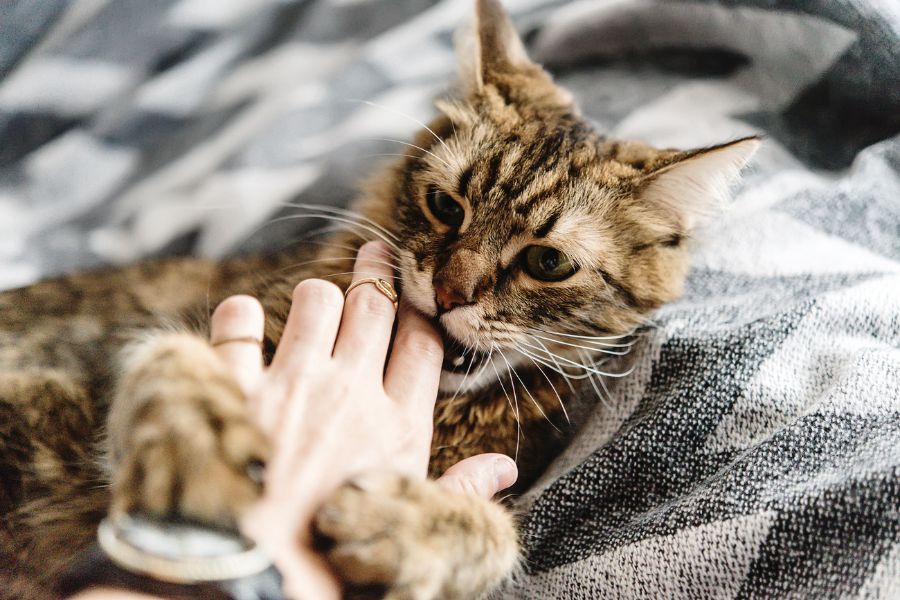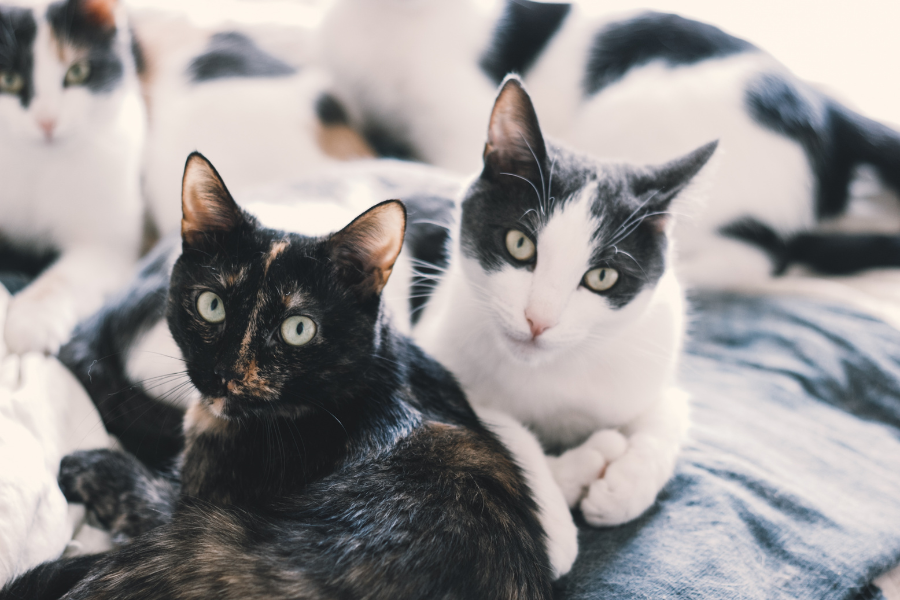
Cats have a reputation for doing whatever they want, but many can learn far more than owners expect. With patience, consistency, and rewards, cats can learn to respond to cues, use scratching posts, enter carriers, and participate in daily routines. Some breeds tend to be more curious, social, and interested in interacting with people, which can make training easier. Others may be more independent or less motivated by human direction. At North Oatlands Animal Hospital in Leesburg, VA, helping pet owners understand their cats’ individual behavior is an important part of comprehensive care. When comparing cat breeds to train, remember that breed is only one factor. Age, personality, past experiences, motivation, and the training method you use can all influence how quickly a cat learns.
Which Cat Breeds Are Easiest and Hardest to Train?
Some cat breeds are generally more responsive to training because they tend to be intelligent, curious, social, or highly motivated by interaction and rewards. Breeds that are more independent may still learn successfully, but they may require more patience and a training approach that respects their preferences.
The easiest cats to train are not necessarily “obedient,” while the hardest cats are not unintelligent. Cats simply have different motivations and learning styles.
10 Cat Breeds at a Glance
| Breed | Training Difficulty | Common Personality Traits | Training Potential |
| 1. Siamese | Easier | Social, vocal, curious | High |
| 2. Bengal | Easier | Active, intelligent, playful | High |
| 3. Maine Coon | Easier | Gentle, social, adaptable | High |
| 4. Abyssinian | Easier | Curious, energetic, interactive | High |
| 5. Burmese | Easier | People-oriented, playful | High |
| 6. Persian | More challenging | Calm, independent | Moderate |
| 7. British Shorthair | More challenging | Independent, relaxed | Moderate |
| 8. Scottish Fold | More challenging | Gentle, adaptable | Moderate |
| 9. Russian Blue | More challenging | Reserved, sensitive | Moderate |
| 10. Norwegian Forest Cat | More challenging | Independent, confident | Moderate |
These categories are general tendencies, not guarantees. An individual Persian may learn faster than an individual Siamese, for example.
What Makes Some Cat Breeds Easier to Train?
Training works best when a cat has a reason to participate. Some breeds tend to seek interaction with people, explore their surroundings, and respond readily to food rewards or play.
Cats that enjoy interaction may be more willing to repeat a behavior when they receive something they value in return.
Traits That Can Make Training Easier
- Curiosity: Curious cats may be more interested in investigating new objects and activities.
- Social behavior: Cats that enjoy human interaction may be more engaged during training.
- Food motivation: Treats can make learning new behaviors more rewarding.
- Playfulness: Toys can be useful rewards for cats that are not strongly food motivated.
- Adaptability: Cats that adjust well to new situations may find new routines easier to learn.
Training should always be based on positive reinforcement. Punishment can create fear or stress and may make a cat less willing to interact with you.
1. Siamese
Siamese cats are often highly social and interactive. Their curiosity and interest in people can make them enthusiastic participants in short training sessions.
They may enjoy learning behaviors that involve interaction, such as coming when called, targeting an object, or performing simple tricks.
| Training Strength | Potential Challenge |
| Social and interactive | Can become bored with repetition |
| Often curious | May demand attention |
| Can respond well to rewards | May lose interest if sessions are too long |
Keep sessions short and engaging. Changing activities can help maintain their interest.
2. Bengal
Bengals are active, curious cats that often enjoy exploring and playing. Their energy can make interactive training especially rewarding.
Puzzle toys, clicker-style training, and play-based rewards may work well for individual Bengals that enjoy learning.
Because they can become bored easily, enrichment is important. Training can provide both mental stimulation and an opportunity for positive interaction.
3. Maine Coon
Maine Coon cats are often described as friendly and adaptable. Their social nature can make them receptive to routines and reward-based training.
Owners may teach useful behaviors such as entering a carrier voluntarily, coming to a specific location, or accepting handling gradually.
Their larger size also makes cooperative behaviors particularly useful for everyday care.
4. Abyssinian
Abyssinians are active and curious, making them natural explorers. They may enjoy training that involves movement, toys, and problem-solving.
Their intelligence can be an advantage, but it also means repetitive exercises may become boring.
Try alternating between behaviors and rewarding successful attempts quickly.
5. Burmese
Burmese cats tend to be people-oriented and playful. Their interest in social interaction can make them responsive to training that includes attention, treats, or play.
They may enjoy learning simple cues when training feels like a game rather than a strict exercise.
Five Breeds Often Considered Easier to Train
| Breed | Why Training May Be Easier | Good Training Approach |
| Siamese | Social and curious | Short interactive sessions |
| Bengal | Energetic and intelligent | Play and puzzle-based training |
| Maine Coon | Adaptable and social | Reward-based routine training |
| Abyssinian | Curious and active | Movement and problem-solving |
| Burmese | People-oriented and playful | Treats, attention, and play |
Which Cat Breeds Can Be More Challenging to Train?
Cats described as “harder to train” are not necessarily less intelligent. Some may simply be less interested in human-directed activities or may prefer predictable routines.
Independent cats can still learn important behaviors. The key is finding what motivates the individual cat.
A cat that ignores treats may respond better to a favorite toy, gentle attention, or access to something it enjoys.
6. Persian
Persian cats are often calm and relaxed, but many are less interested in high-energy training activities. They may prefer short, quiet sessions.
Training should focus on useful behaviors rather than expecting repeated tricks. For example, teaching a Persian to calmly enter a carrier can be more valuable than teaching a complicated behavior.
7. British Shorthair
British Shorthairs are often independent and easygoing. They may learn routines but may not always feel motivated to perform behaviors simply because a person asks.
Use rewards that your individual cat genuinely values and avoid forcing participation.
8. Scottish Fold
Scottish Folds can be gentle and adaptable, but individual personality varies widely. Some may enjoy training, while others may prefer observing rather than participating.
Keep sessions relaxed and stop before your cat becomes frustrated or disengaged.
9. Russian Blue
Russian Blues can be more reserved around unfamiliar people or environments. A cat that is cautious may need additional time to become comfortable with a new training routine.
Build trust first. Quiet surroundings, predictable sessions, and positive rewards can help.
10. Norwegian Forest Cat
Norwegian Forest Cats are generally confident and capable, but their independent nature can make some individuals less interested in repetitive commands.
Training is often most successful when it gives the cat something interesting to do rather than simply asking for repeated behaviors.
Five Breeds That May Need More Patience
| Breed | Possible Training Challenge | Helpful Approach |
| Persian | May prefer low-energy activities | Quiet, short sessions |
| British Shorthair | Often independent | Respect choice and use strong rewards |
| Scottish Fold | Individual motivation varies | Keep training relaxed |
| Russian Blue | May be cautious | Build trust gradually |
| Norwegian Forest Cat | Can be independent | Use enrichment and play |
Again, these are broad breed tendencies rather than fixed rules. Your cat’s individual personality matters more than a breed ranking.
How Can You Train a Cat Successfully?
Regardless of breed, the foundation of effective cat training is positive reinforcement. Reward the behavior you want instead of punishing behavior you do not want.
Start with one simple behavior and reward your cat immediately after the desired action. Over time, your cat can learn that performing that behavior leads to something enjoyable.
Try these steps:
- Choose one behavior: Start with something simple, such as touching a target.
- Find a reward: Use a small treat, toy, or other reward your cat enjoys.
- Keep sessions short: A few minutes can be enough.
- Reward quickly: Give the reward immediately after the desired behavior.
- Repeat consistently: Practice regularly rather than holding occasional long sessions.
- End positively: Stop while your cat is still interested.
Do not expect your cat to behave like a dog. Cats often respond best when they have a reason to participate.
What Behaviors Can Cats Learn?
Cat training is not limited to tricks. Teaching practical behaviors can make veterinary visits, grooming, travel, and daily care easier.
Useful behaviors include:
- Coming when called
- Entering a carrier
- Sitting on a designated mat
- Touching a target
- Accepting gentle handling
- Using a scratching post
- Cooperating with grooming
- Staying calm around household routines
Training Goal vs. Benefit
| Training Goal | Potential Benefit |
| Carrier entry | Makes travel easier |
| Target training | Can guide movement |
| Handling practice | Helps with routine care |
| Scratching-post use | Redirects scratching |
| Coming when called | Helps locate your cat |
| Mat training | Creates a predictable resting spot |
| Grooming cooperation | Makes brushing easier |
These behaviors can be especially valuable when your cat needs veterinary care.
What If My Cat Refuses to Train?
Do not assume your cat is stubborn or unintelligent. Refusal may mean the reward is not motivating enough, the environment is distracting, the session is too long, or your cat is uncomfortable.
Try changing one factor at a time.
For example, if your cat walks away after two minutes, shorten the session. If treats do not work, try a favorite toy. If your cat seems tense, move training to a quieter room.
Sudden changes in behavior should be treated differently. If a cat that normally enjoys interaction suddenly stops participating, seems withdrawn, hides more often, or reacts negatively to handling, a health problem could be contributing to the change.
Conclusion
There is no single breed that is guaranteed to be easy or difficult to train. Siamese, Bengal, Maine Coon, Abyssinian, and Burmese cats may be more responsive to interactive training, while Persian, British Shorthair, Scottish Fold, Russian Blue, and Norwegian Forest Cat individuals may sometimes require a more patient approach. However, personality, motivation, age, environment, and previous experiences can have a bigger effect than breed alone.
If you’re looking for veterinary consultation and searching for a vet near you, then North Oatlands Animal Hospital in Leesburg, VA can help you understand changes in your cat’s behavior and discuss concerns that may affect training or daily routines. Keep training positive, brief, and rewarding, and focus on practical behaviors that improve your cat’s comfort and cooperation. With patience and the right approach, many cats can learn useful skills regardless of their breed.
FAQs
Q1: What are the easiest cat breeds to train?
A: Siamese, Bengal, Maine Coon, Abyssinian, and Burmese cats are often considered responsive to training because many individuals are curious, social, playful, or highly interactive. Individual personality still plays a major role.
Q2: What are the hardest cat breeds to train?
A: There is no breed that is inherently impossible to train. Persian, British Shorthair, Scottish Fold, Russian Blue, and Norwegian Forest Cat cats may sometimes require more patience because some individuals are more independent or reserved.
Q3: How do you train a cat to come when called?
A: Start in a quiet area and use a consistent cue, such as your cat’s name. Reward your cat immediately when it approaches you, then gradually practice from greater distances and in different areas.
Q4: How long does it take to train a cat?
A: The timeline varies by cat and by the behavior being taught. Some cats learn simple behaviors within a few sessions, while others need weeks of consistent practice. Short, positive sessions generally work better than long training sessions.
Q5: Why won’t my cat respond to training?
A: Your cat may not find the reward motivating, may be distracted, or may be uncomfortable with the training environment or behavior being requested. If a previously responsive cat suddenly becomes withdrawn or resistant to handling, discuss the change with your veterinarian.