



A Clearer Picture of Your Pet's Health
Sometimes a physical exam and basic diagnostics aren't enough to tell the full story. When your pet needs a closer look at what's happening inside, ultrasonography gives us a real-time, detailed view of their internal organs, safely, painlessly, and without radiation. At North Oatlands Animal Hospital & Reproduction Center in Leesburg, VA, we use advanced ultrasound technology to get the answers your pet needs faster.
What is Veterinary Ultrasonography?
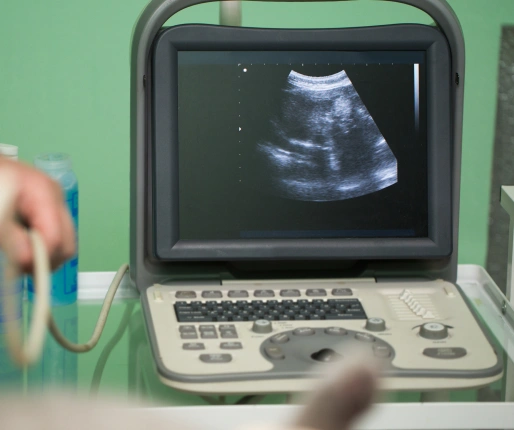
Ultrasonography uses high-frequency sound waves to create detailed images of your pet's internal structures in real time. Unlike X-rays, which are best at capturing bones and dense tissue, ultrasound excels at showing soft tissue, organs, blood vessels, fluid, and more in motion.
It's completely non-invasive, requires no radiation, and is safe for pets of all ages, including pregnant animals.
What Can Ultrasonography Detect?
Ultrasound is one of the most versatile diagnostic tools in veterinary medicine. We use it to evaluate a wide range of conditions, including:
- Abdominal organ abnormalities — changes in the size, shape, or texture of the liver, kidneys, spleen, pancreas, bladder, and adrenal glands
- Masses and tumors — identifying the location, size, and characteristics of internal growths
- Fluid accumulation — detecting abnormal fluid in the abdomen or chest that may indicate infection, injury, or disease
- Heart conditions — evaluating heart structure and function (echocardiography)
- Pregnancy confirmation and monitoring — confirming pregnancy, counting fetuses, and assessing fetal health and development
- Urinary tract issues — bladder stones, thickened bladder walls, and kidney abnormalities
- Gastrointestinal problems — identifying obstructions, thickening of the intestinal wall, or other GI abnormalities
- Guided biopsies — using ultrasound to safely guide a needle to collect tissue or fluid samples without surgery
Why "In-Depth" Ultrasonography?
Not all ultrasound exams are the same. A basic scan can confirm whether something looks abnormal, but an in-depth ultrasound goes further, systematically examining each organ in detail, measuring structures, evaluating blood flow, and documenting findings thoroughly.
This level of detail is especially important when your pet has a complex or unclear condition, when we need to track changes over time, or when we're preparing for a procedure and need a precise picture of what we're working with.
Benefits of Ultrasonography
- No Radiation: Ultrasound uses sound waves, not X-rays, so there's no radiation exposure. It's safe to use repeatedly and is appropriate for pregnant animals and young pets.
- Real-Time Imaging: Ultrasound shows us organs and structures as they move — letting us evaluate blood flow, organ function, and fetal heartbeats in ways a still image simply can't capture.
- Non-Invasive: In most cases, no sedation or anesthesia is needed. We simply apply a small amount of gel to the skin and move the ultrasound probe over the area being examined. Most pets tolerate it very well.
- Guides Accurate Diagnosis: When used alongside X-rays, bloodwork, and physical examination findings, ultrasonography helps us build a much more complete picture of your pet's health, leading to faster, more accurate diagnoses and more targeted treatment plans.
- Biopsy Without Surgery: Ultrasound-guided sampling allows us to collect tissue or fluid from specific areas inside the body with just a needle, no incision required. This means faster answers with far less stress on your pet.
Is Ultrasonography Right for Your Pet?
If your pet has unexplained weight loss, vomiting, changes in urination, a swollen abdomen, or bloodwork that doesn't add up, an ultrasound is often one of the best next steps. It's also routinely recommended for breeding animals, senior pets, and any animal with a known or suspected internal condition.
Don't wait on answers. If your pet needs an ultrasound or you'd like to discuss whether it's the right diagnostic step, our team is here to help.