


A Closer Look at What's Affecting Your Pet
When your pet is showing signs of illness and the cause isn't clear from the outside, rigid endoscopy gives us a detailed look inside, without putting your pet through an invasive surgical procedure. At North Oatlands Animal Hospital & Reproduction Center in Leesburg, VA, we use rigid endoscopy to help diagnose and treat a wide range of conditions quickly, accurately, and with minimal discomfort to your pet.
What is Rigid Endoscopy?
Rigid endoscopy is a minimally invasive diagnostic and treatment tool. A small, rigid tube fitted with a camera and light source is gently inserted into your pet's body to allow your veterinarian to see inside areas that can't be examined any other way, without making large incisions.
Depending on where the scope is directed, rigid endoscopy can be used to examine joints, the nasal passages, the urinary tract, and the abdominal or chest cavity. In many cases, we can also perform minor treatments or collect tissue samples during the same procedure.
What Can Rigid Endoscopy be Used For?
- Rhinoscopy (Nasal Passages): If your pet has chronic sneezing, nasal discharge, or difficulty breathing through the nose, rhinoscopy lets us look directly inside the nasal cavity to check for polyps, foreign objects, fungal infections, or tumors.
- Cystoscopy (Urinary Tract): For pets with recurring urinary issues, cystoscopy allows us to examine the bladder and urethra from the inside — helping us identify stones, masses, strictures, or other abnormalities without abdominal surgery.
- Arthroscopy (Joints): Arthroscopy gives us a direct view inside your pet's joints. It's commonly used to diagnose and treat conditions affecting the shoulder, elbow, or knee — and can often replace more invasive open joint surgery.
- Laparoscopy (Abdominal Cavity): Using rigid laparoscopic equipment, we can examine the organs inside the abdomen, collect biopsy samples, and perform minimally invasive procedures like our Love Spay — all through small incisions rather than a large surgical opening.
- Thoracoscopy (Chest Cavity): When we need to evaluate the lungs, heart, or chest wall, thoracoscopy provides a clear view inside the chest with far less disruption than traditional open-chest surgery.
Benefits of Rigid Endoscopy
- Less invasive than open surgery — smaller entry points mean less trauma to surrounding tissue
- Faster recovery — most pets bounce back much sooner than they would after conventional surgery
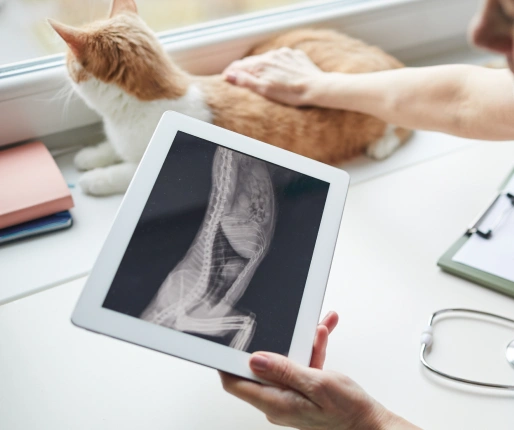
- Highly accurate — direct visualization gives your vet far more detail than X-rays or ultrasound alone
- Diagnosis and treatment in one visit — in many cases, we can collect samples or perform minor procedures at the same time as the exam
- Reduced risk of complications — less tissue disruption lowers the chance of infection and post-procedure pain
Is Rigid Endoscopy Right for Your Pet?
If your pet has a condition that hasn't responded to standard treatment, or if we need a closer look before deciding on the best course of care, rigid endoscopy is often one of the best next steps. Our team will talk through your options with you and make sure you feel confident in the plan before we move forward.
At North Oatlands Animal Hospital & Reproduction Center, we invest in advanced tools like rigid endoscopy because your pet deserves more than guesswork. If you have questions or want to schedule a consultation, we're here to help.