Halloween can bring plenty of fun to your home, from carved pumpkins and colorful decorations to candy bowls and costumed visitors. For pets, however, the same activities can create unfamiliar noises, tempting treats, and opportunities to slip outside. A door that opens every few minutes may be enough for a curious dog or frightened cat to run into the street. Candy, electrical cords, and small decorations can also create health risks. A little preparation can help your pet feel safe while your family enjoys the holiday. At North Oatlands Animal Hospital in Leesburg, VA, we encourage pet owners to plan ahead and consider their animals’ comfort as well as their safety. This Halloween pet safety checklist covers the steps you can take before trick-or-treating begins.
How Can You Prepare Your Home for a Pet-Safe Halloween?
The best way to prepare your home is to create a secure, comfortable area for your pet before visitors arrive. Keep candy and decorations out of reach, check doors and windows, and decide where your pet will stay during trick-or-treating. Preparing early helps prevent last-minute confusion when the doorbell starts ringing.
Some pets enjoy meeting visitors, while others become nervous around unfamiliar people, costumes, and loud noises. Even a normally friendly dog may feel unsettled when people repeatedly approach the front door. Cats may also hide, scratch, or attempt to escape when the house becomes busy.
Your pre-Halloween home checklist
- Choose a quiet room where your pet can relax away from visitors.
- Make sure doors, windows, screens, and gates close securely.
- Store candy, chocolate, and treat bags in closed cupboards or containers.
- Move candles, electrical cords, and small decorations out of reach.
- Prepare fresh water, bedding, familiar toys, and a litter box if needed.
- Check your pet’s identification tag and contact details.
- Tell family members and guests not to feed your pet Halloween treats.
Complete these tasks before children begin getting ready in their costumes. You will have more time to notice hazards and make changes without distractions.
It also helps to think about your individual pet. A confident dog may settle comfortably with a favorite toy, while a nervous cat may prefer a covered bed in a room with the door closed. Choose a setup that suits your pet’s usual behavior rather than assuming every animal will enjoy the celebration.
How Should You Keep Pets Safe Around Halloween Candy and Food?
Keep all Halloween candy and human treats where pets cannot reach them. Chocolate can be harmful to dogs and cats, and sugar-free sweets may contain xylitol, a sweetener that can be highly toxic to dogs. Candy wrappers, sticks, and small packaging can also cause choking or digestive blockages if swallowed.
A candy bowl on a low table may look harmless, but a pet can reach it quickly when no one is watching. Children may also leave sweets on the floor, in open backpacks, or on bedroom furniture. Make candy storage part of your household routine instead of relying on reminders alone.
Foods and items to keep away from pets
| Item | Why it can be harmful |
|---|---|
| Chocolate | Can cause vomiting, restlessness, abnormal heart activity, and other serious effects depending on the amount and type eaten. |
| Sugar-free candy and gum | Some products contain xylitol, which can cause a dangerous drop in blood sugar in dogs and may damage the liver. |
| Raisins and grape-containing treats | Can cause kidney injury in dogs. |
| Candy wrappers and lollipop sticks | May cause choking or digestive tract blockages. |
| Alcoholic drinks | Can cause poisoning and affect coordination and breathing. |
| Rich or unfamiliar party foods | May cause stomach upset, and some ingredients can be toxic to pets. |
Give children a clear rule: candy belongs in their treat bags or a designated storage area, not on the floor or near pets. Keep bags closed and put them away as soon as children return home.
If your pet eats a potentially harmful food or swallows a wrapper, contact a veterinarian promptly. Be ready to share the product name, ingredients, estimated amount eaten, and the time it happened. Do not wait for symptoms or try to make your pet vomit unless a veterinarian specifically tells you to do so.
Which Halloween Decorations Are Dangerous for Pets?
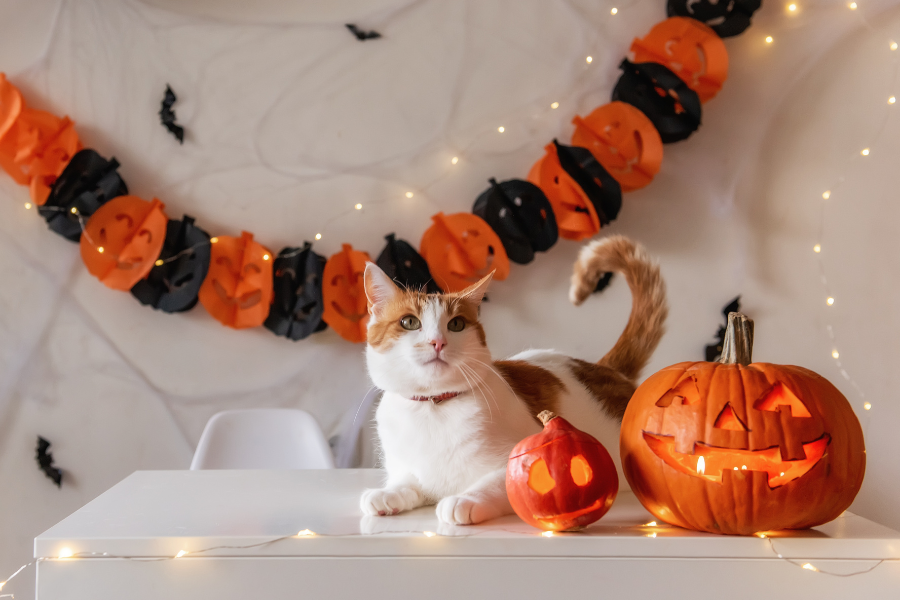
Halloween decorations can create hazards when pets chew, swallow, knock over, or become tangled in them. Small decorative pieces may look like toys, while dangling cords can attract curious puppies and kittens. Open flames also create a burn or fire risk if a pet bumps into a candle or knocks over a pumpkin lantern.
Walk through the rooms where your pet spends time and look at decorations from your animal’s point of view. A hanging spider, loose ribbon, or low electrical cord may be easy to reach even if it looks safely placed to you.
Check these decorations before Halloween night
- Candles and carved pumpkins: Use battery-operated lights when possible. Keep lit candles and their holders well away from pets.
- Electrical cords: Secure cords along walls or behind furniture so pets cannot chew or trip over them.
- Small decorations: Put plastic spiders, buttons, beads, fake teeth, and other small pieces out of reach.
- Fake cobwebs and string: Prevent pets from chewing or becoming tangled in loose material.
- Glow sticks and light-up accessories: Store them securely, since chewing or swallowing parts can cause irritation or injury.
- Decorative plants: Check whether seasonal plants and arrangements are safe for your pet before placing them indoors.
Do not assume that an item is harmless because it is sold as a decoration. If your pet chews or swallows part of an item, contact a veterinarian for guidance. Seek prompt help if your pet is choking, struggling to breathe, or showing severe distress.
How Can You Stop Your Pet From Escaping When Trick-or-Treaters Arrive?
The safest approach is to keep your pet away from the main entrance while people are coming and going. Repeated door openings create opportunities for dogs and cats to slip outside, especially when they are excited, startled, or trying to follow a familiar person. A closed interior door, secure gate, or suitable pet enclosure can help separate your pet from the activity.
Before Halloween evening, check that everyone in your household understands the plan. Children may forget to close the front door, and visitors may not realize that your pet is nearby. Clear instructions can make a meaningful difference.
Make an escape-prevention plan
- Choose a secure room. Keep your pet in a familiar space away from the front entrance and busy walkways.
- Use a physical barrier. A closed door is generally more dependable than asking your pet to stay in place.
- Check identification. Make sure your pet’s identification tag is readable, and contact information is current. If your pet has a microchip, check that the associated contact details are up to date.
- Walk your dog before visitors arrive. An earlier walk and bathroom break may help your dog settle more comfortably indoors.
- Keep outdoor cats inside. Avoid letting cats roam during the busy holiday period.
- Tell guests what to do. Ask them to close doors promptly and avoid entering your pet’s safe space.
If you want more guidance on what to do if a pet gets out despite your precautions, you need to follow certain preventive measures regarding the way you can keep your pet safe.
Remember, identification improves the chance of being reunited with a lost pet, but it does not replace prevention. Keeping your pet secure before the first visitor arrives is the better plan.
Should You Dress Your Pet in a Halloween Costume?
A Halloween costume is optional, and your pet’s comfort should come first. Some dogs and cats tolerate simple clothing, while others find it stressful. A costume that restricts breathing, movement, hearing, or vision can be unsafe, even if it looks cute in photographs.
If you want to dress your pet up, try the costume on for a short period several days beforehand. Watch how your pet moves and behaves. If your pet freezes, hides, struggles, pants heavily, or repeatedly tries to remove the outfit, take it off.
Use this costume safety checklist
- Choose a comfortable fit that allows natural movement.
- Keep the face, eyes, nose, and mouth unobstructed.
- Avoid small parts, loose strings, ribbons, and decorations that can be chewed off.
- Make sure the outfit does not tighten around the neck or chest.
- Supervise your pet while the costume is on.
- Remove the costume if your pet appears uncomfortable.
A festive collar or simple bandana may be a better choice for a pet that dislikes clothing. You do not need to include your animal in every holiday activity for them to be part of the family.
How Can You Help Pets Stay Calm During Trick-or-Treating?
A quiet room, familiar bedding, and a predictable routine can help pets cope with Halloween activity. Doorbells, shouting, music, and unfamiliar costumes may cause stress, even in animals that usually enjoy visitors. Give your pet a place where they can rest without being approached or disturbed.
Set up the room before the evening begins. Include water, a comfortable resting spot, and a few familiar toys. For dogs that enjoy food puzzles, a suitable puzzle or treat toy may help keep them occupied. Cats may appreciate a hiding place, a high resting spot, or access to their usual litter box.
Signs your pet may be stressed
- Hiding or trying to get away
- Pacing, trembling, or repeated barking
- Flattened ears or a tucked tail
- Excessive panting or drooling
- Growling, hissing, or snapping
- Refusing food or trying to escape
If you notice these behaviors, reduce your pet’s exposure to the noise and visitors. Do not force your pet to greet guests or punish them for being frightened. If your pet has a history of severe fear or anxiety around visitors, speak with your veterinarian ahead of the holiday about suitable ways to manage the situation.
For many pets, the kindest Halloween plan is to enjoy the evening from a quiet, secure room rather than joining the activity at the front door.
What Should You Do if Your Pet Eats Candy or Gets Hurt on Halloween?
Contact a veterinarian promptly if your pet eats chocolate, sugar-free candy containing xylitol, grapes, raisins, or another potentially harmful item. You should also seek advice if your pet swallows a wrapper, string, or decoration. Do not assume your pet is safe just because they seem normal at first.
When you call, provide as much information as possible. Keep the packaging if you have it, and estimate how much your pet may have eaten. This helps the veterinary team decide what steps are appropriate.
Get veterinary help right away if your pet develops difficulty breathing, collapses, has seizures, vomits repeatedly, or shows severe weakness. Do not give home remedies or medication unless a veterinarian instructs you to do so.
It is also worth checking your home after the festivities end. Pick up dropped candy, secure treat bags, turn off decorative lights, and remove loose items that pets could chew overnight. A final check can prevent a hazard from being overlooked when everyone is tired.
Conclusion
A safer Halloween starts with a little preparation. Keep candy and decorations out of reach, create a quiet place for your pet, and prevent access to doors that open frequently during trick-or-treating. Choose comfort over costumes, make sure your pet’s identification is current, and know whom to contact if your pet eats something harmful or shows concerning symptoms. If you are searching for a trusted veterinarian near you, then North Oatlands Animal Hospital in Leesburg, VA, encourages pet owners to plan ahead so their pets can enjoy a calmer holiday at home. With a secure space and a few simple precautions, you can welcome trick-or-treaters while helping your pet stay comfortable and safe.
FAQs
Q1: What is the most important Halloween safety tip for pets?
A: Keep your pet in a secure, quiet area away from the front door, and store candy and decorations where they cannot reach them. These simple steps help reduce the risk of escapes, accidental ingestion, and stress.
Q2: Can dogs and cats eat Halloween candy?
A: Halloween candy should not be given to pets. Chocolate and some sugar-free sweets can be toxic, while wrappers and sticks may cause choking or digestive blockages. Contact a veterinarian if your pet eats a potentially harmful item.
Q3: How can I stop my dog from running out the front door on Halloween?
A: Set up a quiet room away from the entrance before trick-or-treaters arrive, and keep the door closed. Make sure everyone in the household knows the plan and that your dog’s identification details are current.
Q4: When should I contact a vet if my pet eats Halloween candy?
A: Contact a veterinarian promptly if your pet eats chocolate, sugar-free candy, or another potentially harmful food, even if they seem fine. Seek immediate help for severe signs such as difficulty breathing, collapse, seizures, or marked weakness.
Q5: Can North Oatlands Animal Hospital help with Halloween pet safety concerns?
A: North Oatlands Animal Hospital can provide veterinary guidance if you are concerned about your pet’s health or possible exposure to a harmful food or decoration. If your pet has eaten something potentially toxic, call promptly and share the product details and the amount you think was swallowed.