A dog that suddenly seems restless, uncomfortable, or unable to settle may be showing an early sign of a serious stomach problem. Dog bloat can develop quickly, and some cases can become life-threatening when the stomach fills with gas and may twist. Knowing what to watch for can help you recognize a problem before your dog becomes severely ill. At North Oatlands Animal Hospital in Leesburg, VA, pet owners can turn to veterinary professionals when concerning symptoms appear. This guide explains what causes bloat, the signs you should never ignore, how veterinarians diagnose and treat it, and what you can do if your dog suddenly shows symptoms.
What Are the Warning Signs of Dog Bloat?
Dog bloat occurs when the stomach becomes abnormally enlarged with gas, food, or fluid. In more serious cases, the stomach can rotate, which can interfere with blood flow and quickly become life-threatening.
Early symptoms may look subtle, but they can progress rapidly. Watch for:
- Restlessness or pacing
- Repeatedly trying to get comfortable without success
- A swollen or tight-looking abdomen
- Repeated attempts to vomit with little or nothing coming up
- Excessive drooling
- Panting or rapid breathing
- Looking at or licking the abdomen
- Weakness or difficulty standing
- Pale or unusual-looking gums
- Collapse
A dog does not need to show every symptom to need veterinary attention. Repeated unproductive retching combined with abdominal swelling is particularly concerning and should be treated as a reason to seek urgent veterinary care.
What Causes Bloat in Dogs?
The exact reason some dogs develop bloat is not always clear. Several factors may increase the risk, including eating habits, body shape, age, genetics, and activity around mealtimes.
Risk factors can include:
Deep-chested body shape: Dogs with deep, narrow chests may be more prone to stomach expansion and twisting.
Eating too quickly: Rapidly swallowing food can increase the amount of air entering the stomach.
Large meals: Consuming a very large meal at once may contribute to stomach expansion.
Stress or excitement: Changes in activity or emotional state may affect normal digestion and eating behavior.
Age: Older dogs may have a higher risk than younger dogs.
Family history: Dogs with close relatives that have experienced bloat may have increased risk.
Breed alone does not determine whether a dog will develop the condition. Even dogs without obvious risk factors can experience serious stomach problems.
Because the condition can become severe without much warning, recognizing symptoms is more useful than trying to predict exactly which dogs will develop it.
How Can I Tell if My Dog Has Bloat?
The most concerning pattern is a sudden change in behavior combined with signs of abdominal discomfort. Your dog may pace, pant, drool, repeatedly stretch, or appear anxious because they cannot find a comfortable position.
One important warning sign is dry heaving, also called unproductive retching. Your dog may repeatedly try to vomit but produce little or nothing. The abdomen may also appear larger, tighter, or painful.
Other signs can include:
- Sudden restlessness
- Repeated pacing
- Excessive drooling
- Abdominal swelling
- Dry heaving or repeated retching
- Rapid breathing
- Weakness
- Pale gums
- Difficulty standing
- Collapse
Symptoms may progress from mild discomfort to severe weakness. That is why waiting to see whether your dog improves can be risky when bloat is suspected.
If your dog suddenly develops several of these signs, contact a veterinarian promptly rather than trying to treat the problem at home.
How Do Veterinarians Diagnose and Treat Bloat?
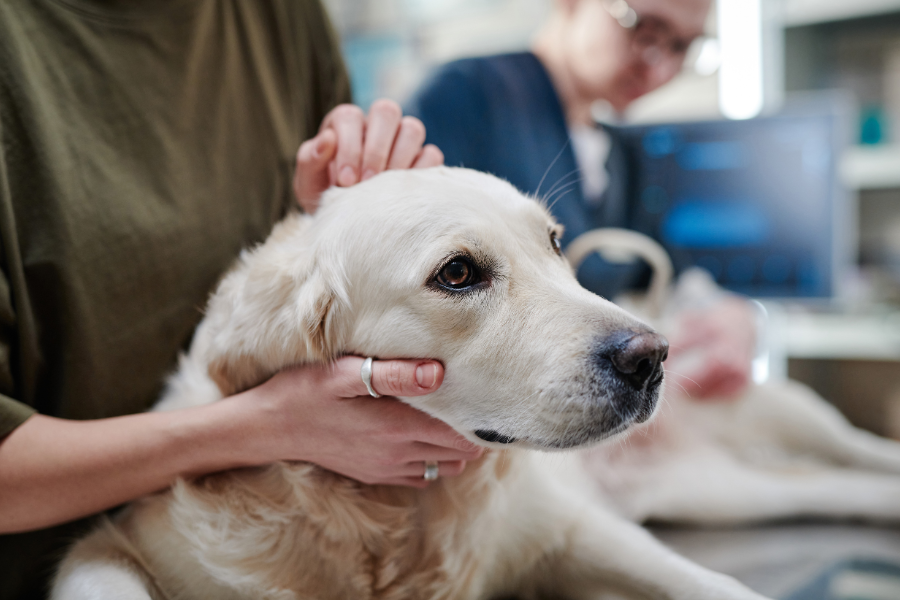
A veterinarian will first assess your dog’s overall condition, including breathing, heart rate, gum color, abdominal comfort, and signs of shock. Abdominal imaging may be recommended to determine whether the stomach is enlarged and whether it has rotated.
Treatment depends on what the examination and diagnostic tests show. When the stomach is severely expanded, the veterinary team may need to relieve pressure while providing supportive care. If the stomach has twisted, urgent surgical treatment may be necessary.
A Hypothetical Case Example
Imagine a large adult dog that suddenly becomes restless after dinner and begins repeatedly retching without bringing anything up. During the examination, the veterinarian notices abdominal enlargement and signs of distress, so the dog is stabilized and diagnostic imaging is performed. The findings indicate a serious stomach problem, allowing treatment to begin without unnecessary delay.
This example highlights why early recognition matters. A dog that simply seems uncomfortable after eating may have a problem that requires immediate assessment.
Is Dog Bloat Always an Emergency?
Not every episode of stomach swelling is caused by bloat, but suspected bloat should be treated as an urgent veterinary concern. The symptoms can overlap with other digestive problems, and it is not possible to reliably determine the cause based only on what you see at home.
Seek urgent veterinary care if your dog develops:
- Sudden abdominal swelling
- Repeated dry heaving
- Severe restlessness or distress
- Heavy drooling
- Rapid breathing
- Weakness or collapse
- Pale gums
- Signs of severe abdominal pain
- A sudden worsening of symptoms
Do not wait for every warning sign to appear. A dog that is repeatedly trying to vomit but cannot produce anything should be evaluated promptly, particularly if the abdomen looks enlarged.
Time matters because serious stomach complications can affect circulation and other organs. Early veterinary assessment gives the care team a chance to determine what is happening and begin appropriate treatment.
What Should I Do if I Suspect Bloat?
If you think your dog may have bloat, seek urgent veterinary care rather than attempting home treatment. There is no safe home remedy that can correct a twisted stomach.
While arranging veterinary care:
- Keep your dog as calm and still as possible.
- Do not force food or water.
- Do not give human medications unless specifically instructed by a veterinarian.
- Call ahead so the veterinary team knows your dog may have a serious abdominal problem.
- Follow the veterinary team’s instructions for getting your dog evaluated.
Avoid spending time trying to determine whether the abdomen is truly swollen or waiting to see if retching stops. When the symptoms fit a serious stomach problem, prompt evaluation is the safer choice.
Can Bloat in Dogs Be Prevented?
There is no guaranteed way to prevent every case of bloat, but some feeding and lifestyle habits may help reduce certain risk factors. Your veterinarian can also discuss your dog’s individual risk based on age, size, body shape, health history, and family history.
Helpful habits may include:
- Feeding appropriately sized meals instead of one very large meal
- Discouraging rapid eating
- Monitoring your dog around mealtimes
- Avoiding intense activity immediately after a large meal
- Maintaining a healthy body condition
- Discussing recurring digestive concerns with your veterinarian
Prevention is helpful, but it should never replace knowing the warning signs. Even a dog with healthy habits can develop sudden abdominal problems.
When Should I Look for Urgent Care for My Dog?
A sudden swollen abdomen, repeated unproductive retching, severe restlessness, weakness, or collapse warrants urgent veterinary attention. These symptoms can indicate bloat or another serious condition that cannot be safely diagnosed at home.
North Oatlands Animal Hospital in Leesburg, VA, encourages pet owners to take sudden and severe changes in their dog’s behavior seriously. Dog bloat can progress quickly, so recognizing the warning signs and acting promptly can make an important difference. If your dog suddenly appears painful, repeatedly tries to vomit without producing anything, develops abdominal swelling, or becomes weak, contact us at (703) 777-7781 for veterinary professional right away. When you are unsure whether symptoms are serious, it is better to seek guidance than wait for the condition to worsen.
FAQs
Q1: What is dog bloat?
A: Bloat occurs when a dog’s stomach becomes abnormally enlarged with gas, food, or fluid. In severe cases, the stomach can twist, interfering with blood flow and creating a life-threatening condition.
Q2: Can a dog have bloat without a swollen stomach?
A: Early in the condition, obvious abdominal swelling may not always be easy to recognize. Restlessness, repeated dry heaving, drooling, and sudden discomfort can also be important warning signs.
Q3: What should I do if my dog keeps trying to vomit but nothing comes up?
A: Repeated unproductive retching can be a serious warning sign, especially when accompanied by restlessness or abdominal swelling. Seek urgent veterinary care rather than waiting for the symptoms to resolve.
Q4: How quickly can bloat become serious in dogs?
A: Serious complications can develop quickly, particularly when the stomach twists. Because it is difficult to predict how rapidly a dog’s condition will progress, suspected bloat should be evaluated promptly.
Q5: When should I seek urgent care for suspected bloat?
A: Seek urgent care for sudden abdominal swelling, repeated dry heaving, severe restlessness, heavy drooling, weakness, pale gums, breathing changes, or collapse. These signs can indicate a serious abdominal problem requiring immediate veterinary assessment.