



Your dog seemed perfectly fine on his morning walk, but later that afternoon, he collapsed in the backyard. Or maybe your cat has been a little more tired than usual, and your vet noticed something unusual with a stethoscope. Heart problems in pets can develop quietly, with few warning signs, until things become serious. That is why veterinary electrocardiograms have become one of the most valuable tools in modern pet care. At North Oatlands Animal Hospital in Leesburg, VA, we use ECGs to look beyond the surface and catch cardiac issues before they become life-threatening. This article explains what a veterinary ECG is, how it works, and when your pet might need one.
What Is a Veterinary Electrocardiogram and Why Does It Matter?
A veterinary electrocardiogram (ECG or EKG) is a non-invasive test that records the electrical activity of your pet’s heart. Every heartbeat is triggered by an electrical signal, and an ECG traces those signals in real time, producing a readable pattern of waves and intervals on a printout or screen.
That pattern tells your veterinarian a great deal. A normal rhythm looks a specific way. When something is off, whether the heart is beating too fast, too slow, or skipping beats, the tracing shows it. An electrocardiogram cannot diagnose every heart condition on its own, but it is often the first test that reveals a problem that cannot be felt or heard.
Cardiac disease is more common in pets than many owners realize. Studies suggest that roughly 10 percent of all dogs seen in general practice have some form of heart disease, and the numbers are even higher in older or certain breeds. Cats are prone to a condition called hypertrophic cardiomyopathy (HCM), which can go undetected for years. An ECG is one of the key tools used to identify these issues early.
Signs and Symptoms That May Point to a Heart Problem
Pets are remarkably good at hiding discomfort, which makes heart disease particularly tricky to catch. By the time obvious symptoms appear, the condition may already be advanced. That said, there are signs worth paying close attention to.
In dogs, watch for:
- Unexplained fatigue or reduced interest in exercise
- Coughing, especially at night or after lying down
- Fainting or sudden collapse
- Labored or rapid breathing at rest
- A swollen belly
In cats, the signs can be even more subtle:
- Hiding more than usual
- Loss of appetite
- Rapid or open-mouth breathing
- Sudden hind leg weakness or paralysis (a sign of a blood clot)
- A generally “off” feeling that is hard to pin down
If your pet shows any of these, a physical exam combined with an electrocardiogram and possibly chest X-rays or an ultrasound can help build a clearer picture. Do not wait to see if the symptoms resolve on their own.
How Veterinarians Diagnose and Treat Cardiac Conditions?
When a pet comes in with a suspected heart issue, the workup usually starts with a stethoscope. A trained vet can often detect an abnormal heart rhythm or a heart murmur just by listening. But hearing something unusual is only the beginning.
An ECG provides the next layer of information. Small electrode clips are placed on your pet’s limbs and sometimes the chest. The test takes only a few minutes, and most pets tolerate it well without sedation. The resulting tracing shows the electrical pattern of each beat and allows the vet to identify conditions like:
- Atrial fibrillation (a chaotic, irregular rhythm common in large breed dogs)
- Bradycardia (an abnormally slow heart rate)
- Ventricular tachycardia (dangerously fast beats originating from the lower heart chambers)
- Heart block (a delay or interruption in the electrical signal between chambers)
From there, treatment depends entirely on the diagnosis. Some arrhythmias are managed with medication. Others may require a referral to a veterinary cardiologist for more advanced care, such as a pacemaker. Caught early, many of these conditions can be stabilized, giving your pet a good quality of life for years to come.
What to Expect During a Cardiac Screening at Our Clinic?
The idea of a heart test can feel intimidating, but the process is straightforward and gentle. Here is what a typical ECG visit looks like at a general veterinary practice.
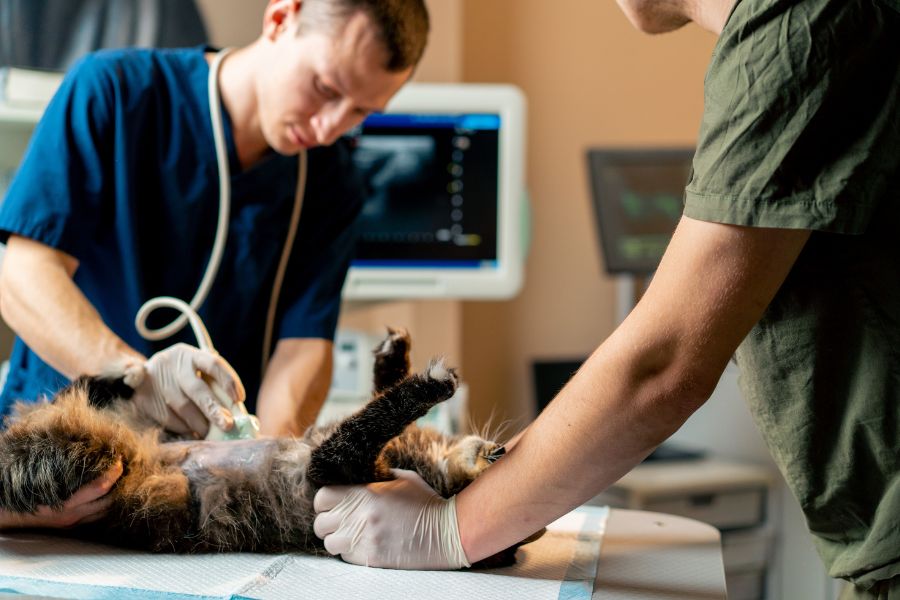
Your pet will be asked to lie still, usually on their side, for a few minutes. Electrode clips are attached to the skin at specific points on the legs. No needles are involved, and there is no radiation. The machine records the heart’s electrical signals, and the vet reviews the tracing right away.
The whole process usually takes under 10 minutes. Some pets are a little wiggly at first, but most settle down quickly. If your pet is particularly anxious, your vet may suggest a mild calming approach before the test.
After the ECG, your vet will walk you through the results. If everything looks normal, that is reassuring news, especially for breeds at higher risk for cardiac disease. If something is abnormal, your vet will explain what was found, what it likely means, and what steps come next. You will never be left guessing.
Benefits of Early Cardiac Screening for Your Pet’s Health
Catching a heart problem early is almost always better than finding it late. Here is why that matters in practical terms.
Medications work better when started sooner. Drugs used to manage abnormal heart rhythms or slow the progression of heart disease are more effective when introduced before significant damage has occurred. Waiting until a pet is in crisis limits your options.
You get a baseline. For pets with known risk factors (older age, certain breeds, a history of illness), an ECG establishes a normal reference point. Future tests can then be compared against that baseline to spot changes over time.
It reduces emergency risk. An undetected arrhythmia can lead to sudden collapse or worse. Identifying the issue through a routine screening gives you the chance to act before a crisis unfolds.
Peace of mind has real value. Knowing your pet’s heart is functioning normally is worth something. And if it is not, knowing early gives you options.
Beyond the basics, cardiac screening also helps guide decisions around anesthesia. Pets with heart conditions carry a higher anesthetic risk. An ECG before any procedure, including a routine dental cleaning, allows your vet to plan accordingly and take precautions that make surgery safer.
How to Know If Your Pet Needs an Electrocardiogram?
Not every pet needs an ECG at every visit. But there are clear situations where one is strongly recommended.
Your vet will typically suggest an electrocardiogram if:
- A heart murmur or irregular rhythm is detected during a physical exam
- Your pet has fainted, collapsed, or had a seizure with no obvious cause
- Your pet belongs to a breed with a known predisposition to cardiac disease (Doberman Pinschers, Boxers, Cavalier King Charles Spaniels, Maine Coon cats, and Ragdolls, among others)
- Your pet is over seven years old and has not had a recent cardiac evaluation
- A procedure requiring anesthesia is planned, especially in an older or high-risk pet
- Your pet is on a medication known to affect heart rhythm
That said, you do not have to wait for a red flag. Many owners in our area choose to include cardiac screening as part of their pet’s annual wellness exam, particularly as their animals age. Early detection is the whole point.
Why Pet Owners Can Trust a Hospital for Heart Care?
When it comes to your pet’s heart, you want a team that takes a thorough, unhurried approach. That means listening carefully during the exam, explaining findings clearly, and making sure you understand your options before any decisions are made.
Cardiac care in pets has come a long way. The same technology that helps cardiologists monitor human heart rhythms is now routinely available in veterinary practices. What makes the difference is how that technology is used: as part of a complete picture of your pet’s health, not a box to check.
Pet owners in Leesburg, VA, come to North Oatlands Animal Hospital because they want that kind of attentive, thorough care. Whether you have a young Boxer whose breed puts him at risk, a senior Labrador slowing down more than expected, or a cat who just does not seem like herself, we take the time to investigate rather than assume.
Conclusion
Heart problems in pets are often silent until they are not, and by then, options may be limited. Veterinary electrocardiograms give pet owners and their vets a window into what is happening inside the heart, long before symptoms become obvious. Early detection means earlier treatment, safer anesthesia, better outcomes, and more time with the animals you love. If you are residing in Leesburg, VA, or its surrounding locations like Ashburn, Haymarket, Aldie, Purcellville, then North Oatlands Animal Hospital can help with cardiac screening, which is part of how we look after your pet’s long-term health. If it has been a while since your pet had a full cardiac evaluation, or if you have noticed any of the warning signs mentioned here, call us to schedule an appointment. Your pet’s heart is worth the check.
Frequently Asked Questions
Q1: What is a veterinary electrocardiogram used for?
Ans: A veterinary electrocardiogram records the electrical activity of a pet’s heart to detect abnormal rhythms, irregular beats, or other cardiac issues. It is used to diagnose conditions like atrial fibrillation, heart block, and ventricular arrhythmias. The test is non-invasive and can be completed in just a few minutes during a standard vet visit.
Q2: What are the signs that my dog or cat might have a heart problem?
Ans: Common signs of cardiac disease in pets include unexplained fatigue, exercise intolerance, coughing (especially at night), fainting, labored breathing, and a swollen abdomen. Cats may show more subtle signs like hiding, loss of appetite, or sudden hind limb weakness. Any of these symptoms warrants a prompt veterinary evaluation, including a cardiac screening.
Q3: How does a pet’s heart disease diagnosis work?
Ans: Pet heart disease diagnosis typically begins with a physical exam and stethoscope evaluation. If a murmur or irregular rhythm is found, the vet may recommend an ECG, chest X-rays, and possibly a cardiac ultrasound (echocardiogram). Together, these tests help pinpoint the type and severity of the condition and guide treatment decisions.
Q4: When should I get a cardiac screening for my pet, and how much does it cost?
Ans: Cardiac screening is recommended for older pets (generally seven years and up), breeds prone to heart disease, and any pet showing symptoms of cardiac trouble. It is also advised before procedures requiring anesthesia. Costs vary by clinic and region, but an ECG is typically an affordable add-on to a wellness visit. Contact your veterinary clinic directly for current pricing.
Q5: When is it urgent to see a vet about my pet’s heart?
Ans: You should seek veterinary care immediately if your pet faints, collapses, struggles to breathe, or shows sudden hind leg weakness. These can be signs of a serious cardiac event that requires urgent attention. For less acute concerns, such as a new cough or decreased energy, schedule an appointment as soon as possible rather than waiting to see if it improves on its own.